


China-Based Exporter — Competitive Pricing, Welcome to Inquire!
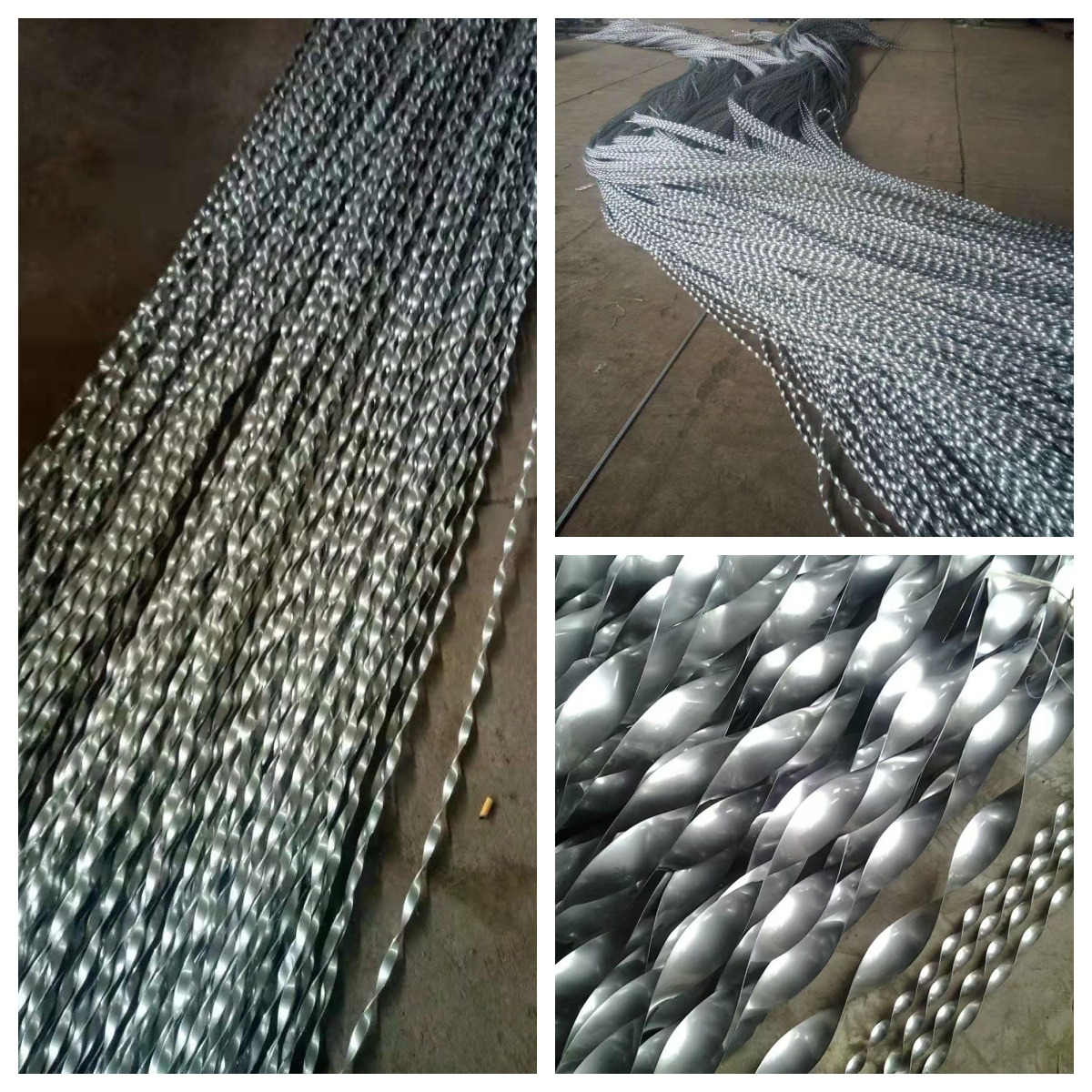
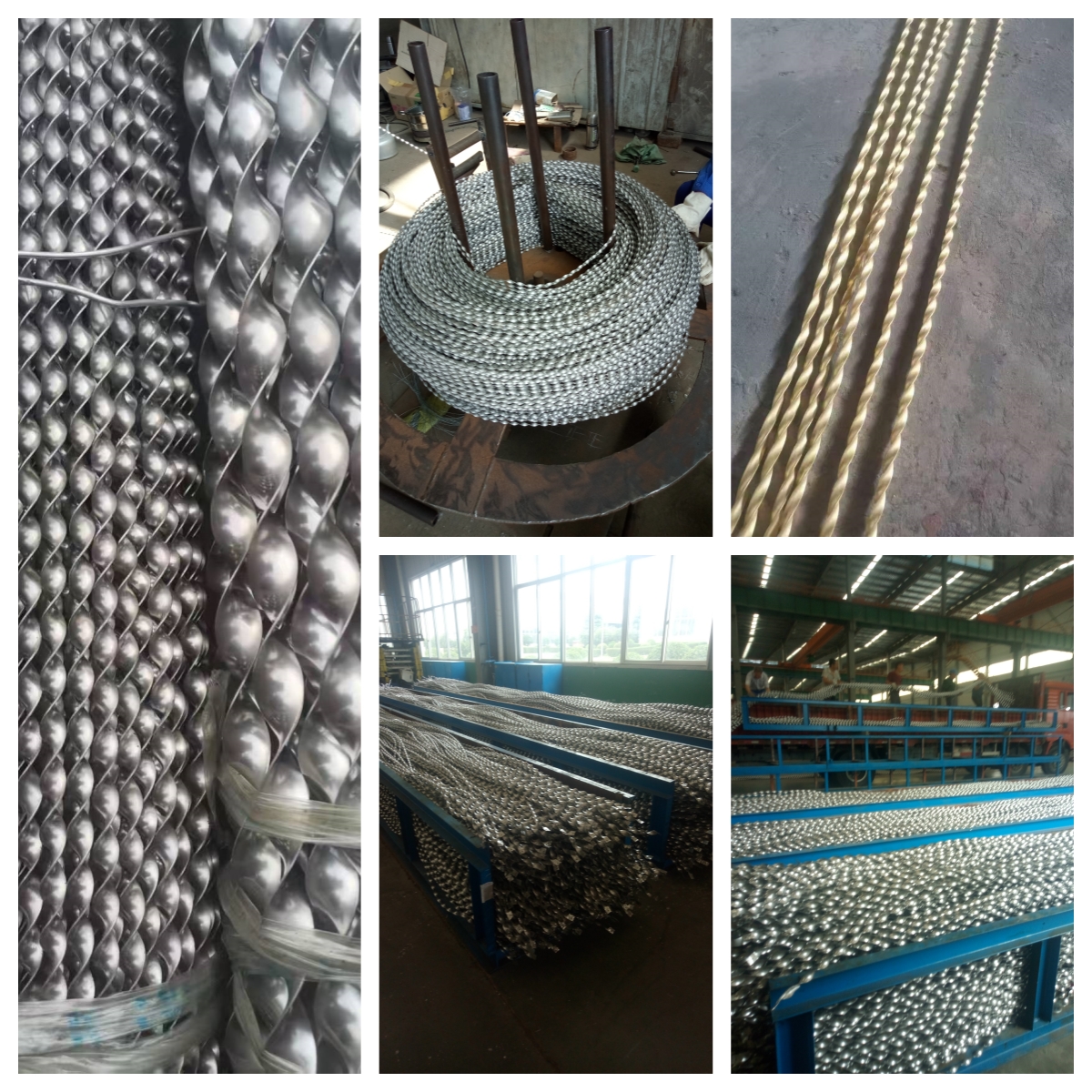
We are a professional China-based exporter of Twisted Tape Turbulators, dedicated to providing cost-effective heat transfer enhancement solutions to customers worldwide.
As a factory-direct supplier, we offer competitive pricing, stable delivery, and full customization. Materials, dimensions, twist ratios, hole patterns, and surface finishes
can all be produced according to your requirements.
Contact Us:
Company Name: Hengshui So Me Business Co., LTD.
Contact Person: Kitty
Email: info@augersystem.com
Phone / WhatsApp / WeChat: [+86-13373487375]
In the world of thermal engineering, efficiency is king. Whether you are designing a massive power plant or optimizing a compact HVAC system, the goal is always the same: transfer more heat with less energy and lower material costs. But as engineers, we often hit a wall—quite literally—known as the thermal boundary layer.
This is where Twisted Tape Turbulators step in.
These simple yet highly effective inserts are game-changers in the field of passive heat transfer enhancement. By inserting a twisted metallic strip into a tube, you can dramatically increase turbulence, break up insulating boundary layers, and boost heat transfer coefficients by up to 200% or more.
In this post, we take a deep dive into the anatomy of twisted tape turbulators, exploring their material classification, application areas, and performance metrics to help you choose the right solution for your next project.
1. The Anatomy of a Turbulator: Material Classification
The material of a twisted tape is not a one-size-fits-all choice. It is dictated by the operating environment, temperature, and the chemical nature of the working fluid. Here is how we classify them:
A. Stainless Steel (SS 304, 316, 316L)
The industry standard. Stainless steel turbulators are the workhorses of the heat exchanger industry.
Why choose it: Excellent corrosion resistance, high mechanical strength, and the ability to withstand high temperatures (up to 600°C+).
Best for: General industrial heating, steam condensers, and food processing where hygiene and durability are paramount.
B. Carbon Steel
The economical choice for non-corrosive environments.
Why choose it: High strength at a lower cost compared with stainless steel.
Best for: Oil coolers, air preheaters, and large-scale industrial boilers where the fluid is non-aggressive.
C. Copper & Brass
The thermal conductors.
Why choose it: Superior thermal conductivity. Copper tapes can transfer heat away from the tube wall extremely quickly.
Best for: HVAC systems, refrigeration, and marine applications where thermal efficiency is the absolute priority.
D. Exotic Alloys (Titanium, Inconel, Hastelloy)
The specialists for extreme conditions.
Why choose it: Unmatched resistance to aggressive chemicals (acids, chlorides) and extreme temperatures.
Best for: Desalination plants, chemical reactors, and aerospace thermal management where failure is not an option.
E. Polymers & Composites
The lightweight contenders.
Why choose it: Resistance to specific chemical attacks and lightweight properties.
Best for: Low-temperature corrosive environments where metal would degrade too quickly.
2. Application Areas: Where Do They Shine?
Twisted tape turbulators are versatile, but they are most valuable in scenarios where you need to upgrade an existing system without changing its footprint. Here are the key sectors:
1. Power Generation & Energy
In condensers and feedwater heaters, twisted tapes reduce the size of the heat exchanger required for a given duty. This leads to significant capital cost savings and improved cycle efficiency in power plants.
2. HVAC & Refrigeration
In chillers and evaporators, the insertion of twisted tapes allows for more compact units. This is critical in urban environments where space is at a premium.
3. Chemical & Petrochemical Processing
When dealing with viscous fluids or fluids prone to fouling, twisted tapes keep the flow moving. The swirling motion prevents deposits from settling on the tube wall, extending maintenance intervals.
4. Food & Beverage
In pasteurizers and sterilization equipment, uniform heat transfer is essential for safety. Turbulators help ensure there are no “cold spots” that could harbor bacteria.
5. Renewable Energy
In solar thermal collectors and biomass boilers, twisted tapes enhance heat absorption from the source, improving the overall efficiency of the renewable system.
3. Product Performance: The Science of Swirl
Why do twisted tape turbulators work so well? It comes down to fluid dynamics.
The Mechanism: Creating Swirl
When fluid flows through a plain tube, it moves in a laminar (layered) fashion near the wall. This creates a “boundary layer”—a thin film of fluid that acts as an insulator.
A twisted tape forces the fluid to rotate. This swirl flow does three things:
Thins the Boundary Layer: Centrifugal force pushes fluid against the wall, reducing the insulating film.
Increases Residence Time: The helical path is longer than a straight line, giving the fluid more time to absorb or release heat.
Promotes Mixing: It mixes hot and cold fluid streams, equalizing the temperature profile.
Key Performance Metrics
Metric Impact of Twisted Tape
Heat Transfer Coefficient (HTC) Increases significantly (1.5x to 3x). This means less surface area is needed for the same heat duty.
Friction Factor (Pressure Drop) Increases. This is the trade-off. The swirl costs pumping power. However, modern designs (such as perforated or jagged tapes) minimize this penalty.
Fouling Resistance Decreases. The scouring action of the swirl keeps surfaces cleaner.
Twist Ratio (y) A critical design parameter. A lower twist ratio (tighter twist) yields higher heat transfer but also higher pressure drop.
The Design Trade-Off: Heat Transfer vs. Pumping Power
When selecting a turbulator, you must balance thermal gain against hydraulic loss.
Loose Twist (High y): Lower pressure drop, moderate heat transfer enhancement. Ideal for systems where pumping power is limited.
Tight Twist (Low y): High heat transfer enhancement, high pressure drop. Ideal for high-value processes where space is the limiting factor.
4. Why Upgrade to Twisted Tape Turbulators?
If you are still relying on plain tubes, you are leaving efficiency on the table. Here is the business case for upgrading:
Energy Savings: By improving heat transfer, you can lower the flow rate of cooling water or reduce the required temperature difference, leading to lower operating costs.
Compactness: Retrofitting existing tubes with turbulators can increase capacity without purchasing new equipment.
Extended Lifespan: Reduced fouling means less corrosion and longer equipment life.
Cost-Effective: Compared with active enhancement techniques (such as vibration or electrostatic fields), twisted tapes are passive and require no external power source.
Twisted tape turbulators are a small addition with a massive impact. From the choice of material to withstand harsh chemicals, to the application in power plants and HVAC systems, to the performance gains in heat transfer efficiency—they represent one of the most cost-effective investments in thermal management.
Whether you are designing a new system or looking to squeeze more performance out of an existing one, it is time to stop thinking straight and start thinking twisted.
Ready to optimize your heat transfer system?
We are a China-based exporter offering competitive prices and custom twisted tape turbulator solutions. Welcome to send us your inquiry.
Contact Us:
Company Name: Hengshui So Me Business Co., LTD.
Contact Person: Kitty
Email: info@augersystem.com
Phone / WhatsApp / WeChat: [+86-13373487375]
Post time: Oct-09-2026